Showing posts with label vocabulary. Show all posts

Wednesday, August 20, 2014

Bringing Words to Life: Energizing the Verbal Environment

Hi everyone! It's the last week of this book study (and the last day of my summer), so this is a bittersweet ending. As I said last week, I plan on sharing ideas and activities that we do in class once the school year starts, so it's definitely not the end of "robust vocabulary" discussions here. Just the end of the book.

If you're a new reader or missed a post, you can always go to the previous posts by clicking on the "Robust Vocabulary Instruction" tab at the top of my blog!


This week, we are talking about ways to energize the verbal environment. When I read through, this almost sounded like a summary chapter, but I'll go through it quickly pulling out a few great ideas and thoughts.

Use Mature Language. You don't have to teach every "big" word you use, but be intentional about your own oral vocabulary. Maybe if you do a weather report for the day, call your weather person the meteorologist. Tell students you're proud of how diligent they are working. Use famished to describe a hungry student. Be creative! Your students may pick up on a few of these words without even having specific instruction!

Students can either learn the meaning of these words through looking it up (if you think the dictionary will have a reasonable definition for it), teacher telling them, OR you could let them talk about it and figure it out on their own. You don't have to worry as much about them guessing way off base because these words won't be assessed. If they show particular interest in a word, maybe add it to your word wall so they can see it and be reminded to use it.

Explore Within and Across Words. There are some words that students may recognize in one context but unfamiliar with other ways it can be used. Discuss these terms and introduce them in a new way so that students can better understand them.

*********************************************************************************

Can you think of other examples of how you can use mature language in your classroom to help expand your students' vocabularies?

Wednesday, August 13, 2014

Bringing Words to Life: Differentiating Vocabulary Instruction

Did you notice something at the top of my blog? I created a new page that grouped all of my posts in this book study together! If you joined halfway through or just want to refer back to them, now you can go straight to the page and find them a lot faster. I will also be adding activities that I do in my class to show real-life examples once the school year starts. We have 3 more weeks before kids come...eek! I'm so not ready. I haven't even been to my classroom yet (although I really just have to pull paper off of my bookshelves and throw up a few posters. No biggie.)!


But back to the reason you're here (I hope): Chapter 9 of Bringing Words to Life, which is all about differentiation. One of those other buzz words. I know.

The chapter focuses on two specific groups: struggling readers and LEP (or ELL) students. I guess there isn't as much need for focus on your advanced students because this type of robust instruction will hopefully be challenging for them as well as your average students.

The authors give a great little format for helping these students close the gap between them and their peers.
  1. Whole group instruction on the target words the way it has been discussed in previous chapters (please go back and check them out if you haven't already)
  2. Identify students who did not show mastery over these words in the end-of-the-unit assessment, and provide additional instruction in smaller groups. The book recommends 15-minute sessions for three more days.
  3. Any students who still have not mastered the understanding of these words will receive 3 more days of instruction. Be sure to use different instructional activities so they have more chances of understanding.

During these additional sessions described in steps 2 and 3, students should be given opportunities to talk about word meanings in different contexts and also to use the words appropriately in discussion. As you continue with this format, fewer and fewer students should need the additional instruction.

Another way to help these struggling readers (and LEP students) is to provide more explicit questioning and scaffolding in the initial instruction for the word. These students will need more guidance and explanations as they learn new words, so we need to be ready to provide it until they are ready for us to cut back.

One quote that really stood out to me from the book was this one about how we should teach:

The two main concerns with English learners are which words should be taught and what kinds of activities are most effective.

Which Words to Teach:
Just like with traditional students, we want to focus on those Tier Two words that appear frequently in literature but are not as common in oral language. The key is to begin this instruction AS SOON AS the student can manage everyday conversation. Don't wait until they know all of the basics. They will pick it up naturally!
The big thing to consider here is that ALL students need to be able to understand the concept of the words being introduced.

What Instructional Activities are Best:
Once again, remember that different is not necessary. What works fir LEP students will also work for the rest if the class. All students need frequent interaction with the target words. There are some adaptations that will make things a lot easier, though.

  • Provide text previews in student's first language, if possible, before reading text in English
  • Use high-interest texts for your students
  • Provide visuals or multimedia texts for extra support
Another major strategy to consider is to use cognates (words such as dictionary and diccionario which have the same meaning AND are very similar). Focus in on the roots of these words, which are often Latin or Greek and have to be taught in the upper grades anyway (at least in Virginia), then students will be able to recognize the relationships between those words and also identify other words.

Can you believe that there's only one more chapter to cover? I feel like I've learned SO much, and I hope this has been helpful to you, as well! Next week is about energizing the verbal environment!

Oh, and before I go, I wanted to mention a fantastic giveaway for you to check out. My friend and fellow VA Blogger, Rachel from Mrs. O Knows is celebrating her 2nd blogiversarry this week with a different giveaway every day. Today's winner can score one of my mystery packs along with some other great stuff!


Wednesday, August 6, 2014

Bringing Words to Life: Vocabulary and Writing


Chapter 8 was all about vocabulary and writing, which I was very excited to read. Unfortunately it was one of the shortest chapters because there is VERY little research that has been done on how robust vocabulary affects writing. If we think about it as teachers, though, we know that stronger vocabulary instruction will naturally produce stronger writers. You've probably heard millions of times that the best writers are great readers. They are exposed to better writing and therefore are better at modeling it on their own.

This is going to be a slightly different post because I mainly want to share some examples of how to intentionally work in some strong vocabulary instruction to help with writing.

One way that I've seen a lot in person and online is to focus on specific verbs that are overused and give students synonyms to use in their place.

Rescue Tired Words

"Dead" words to build vocabulary. Have students add better, more descriptive words to replace original word.

It's important to leave these words up so students have the visual reminder. This holds true for any new vocabulary (remember last week's chapter about maintaining vocabulary?)

Another way that the book mentioned was looking at specific ideas that are frequently mentioned and teach target words for those ideas. This especially works if you're giving a prompt or discussing a certain topic. For example, teach students the word hazardous to describe road conditions during icy weather. Or choose from words you notice them specifically overusing in their writing (or in your classroom in general). Then encourage students to use these target words in their writing.

One thing to consider before I go: It's not enough to simply introduce these words and teach them traditionally. Yes, they may try to use them and may even get it. But you may notice that they don't truly understand how to use the word correctly. If you're just starting to follow me, check back with my earlier posts to learn ways to incorporate robust vocabulary instruction into your day.

What are some ways that you work to improve students' word choice (vocabulary) in their writing?

Wednesday, July 30, 2014

Bringing Words to Life: Instructional vs. Natural Contexts

What? We're on week 7? I feel like the time is flying, which I don't want to happen yet. August is only two days away, and I go back to school at the end of August...I know, some of you are already back and have no pity for me. But remember. I was in school until late June. So there. You can rub it in my face when you're out for Memorial Day.

And if it makes you feel better, I AM working this week. I'm on a committee reviewing our state reading test for 5th grade (which I will talk about more next week), so I actually have been not only getting up before 7 but also dressing professionally and walking out the door by 8.


But enough about me. Hopefully you're also here for the book study, although I'm sure you'll hear more about me later. Or at least my cutie-pie little boy!

Chapter 7: Working with Instructional and Natural Contexts

Let's start with Instructional contexts. These are when the context was intentionally created for the purpose of highlighting the target word and giving strong clues to the meaning. The big thing to add here is that it's important for a definition/explanation of the word to be developed. Teachers should begin by modeling their thinking to shoe how they used the context to determine the word's meaning (think alouds), but they should let go of the reigns and guide students to begin doing this on their own ASAP! Use guiding questions when they need help finding the right clues.

On the flip side, naturally occurring contexts may or may not even provide enough information for students to find the correct meaning of the word, but the authors make an interesting point that I agree with: It's more important to focus on the process of determining the word's meaning than actually finding the meaning. Why? Because then even when there isn't enough information to decipher the word, students may at least have a general idea of what type of word they're looking for. Plus they will be more equipped to use the clues that are provided independently.

Here's the instructional sequence they recommend:

  • Read the context, then record it with an emphasis on the unfamiliar word
  • Establish meaning of the context (What's going on? What are they saying?)
  • Make the first "guess" at what the word means, and support your prediction with evidence from the text
  • If the student can't come up with a response or support with text, go back to step two and flesh out what's happening in the context some more
  • Consider other possibilities (this helps students understand that they may not necessarily have it exactly right, but that's okay. Plus you can point out that there may not even be a way to know for sure from the text what the word means)
  • Summarize the entire process to review the information and let students draw conclusions based on that.

One final thought I will leave you with: it is VERY IMPORTANT for students to understand that not all contexts will contain useful information to figuring out the meaning of a word or even a general idea of the meaning. First, they should refer to a larger portion of the context (too many of my kids just look at the one sentence and are done), but they should be encouraged to refer to an outside source when that doesn't work. And don't make the just look in a dictionary because we've already talked about how that may be completely useless. Let them ask you! Of course, you may want to create a system (sticky notes, faint line under unfamiliar words, etc) to avoid interruptions, but they need to realize that it's okay to ask an adult and admit when they don't know what a word means. If they're scared to ask for help, then it's not benefiting anyone.


Thursday, July 24, 2014

Bringing Words to Life: Assessing and Maintaining New Vocabulary PART TWO

I said I would post the rest today, so here it is! I actually went to the gym this morning at the ungodly hour of 6:00 AM to do BodyPump (because I'm a nut and figured I should at least get up early a few days a week since I'll be back at school in a month), and then I came back to post this so you could read it at a reasonable time today. You know. If you're being good and going to bed early over the summer. Or if you're back to school right now preparing for students in the next week or two...


Anyway, today is all about maintaining new vocabulary. Too often (and I'm definitely guilty of this), we introduce a word and then don't use it, or at least not intentionally, after it's been tested. How can we expect our students to keep these words in their vocabularies, then? I'm going to go through some activities that you can use in and out of the classroom.

AT SCHOOL

  • Keep some kind of record (index cards are the best) of words that you've learned throughout the year. The card should include word meanings and sample uses.
  • Point out words when they appear in other texts being read. Also, point out when the word can be applied to the text (a character is being testy).
  • Use the words to start your day - Morning Messages, questions centered around a vocabulary word, etc.
  • Find funny pictures from the internet, and have students create sentences to describe it using a vocabulary word. You could even have students vote on the best sentence!
  • Keep a list of words, and put tally marks beside them if someone uses the word or finds it used.
AT HOME
  • Word Wizards gain points by bringing in proof of hearing, seeing, or using new vocabulary outside of the classroom. They have to be able to describe the context correctly to get a point. Points can be used for extra credit or whatever the teacher decides!
  • Another form of Word Wizards is where the teacher assigns specific words for students to find or create examples for.
  • In the Media is geared more toward older students (particularly middle and high school), but students look for words in ANY media - video games, websites, TV, books, magazines, etc. Each student is given a deposit slip where they have to records their name, the word, the context in which it was found, and you can even have them include their source (especially if you're curious what they're spending their time reading/watching). I think I may try this with my 5th grade students!

It's important that students are looking for and using these words in AND out of the classroom to help secure these words into their vocabulary.

Thank you for sticking with me for two days! This chapter may have been short, but it was JAM-PACKED with great information. I think it may have been my favorite so far! Come back next Wednesday to learn about working with instructional and natural contexts.

Wednesday, July 23, 2014

Bringing Words to Life: Assessing and Maintaining New Vocabulary PART ONE

Sorry I'm a little LOT late getting this week's post up, but I was helping with some manual labor today. We're painting my in-law's fence as a thank you for all the little extras they do for us all the time (like constantly babysitting our kid and buying things that we could've bought ourselves). Anyway, it was H-O-T today and I almost put it off until tomorrow. Instead, I decided that this chapter has SO much information that I'm actually going to split it into two parts. So you can read about assessment today and come back tomorrow to learn about maintaining new vocabulary!


ASSESSMENT


How many of you cringe simply at the mention of the word? Fortunately we're not talking about any big tests or even a test at all, necessarily. These assessments are meant to be fairly quick and to-the point. I have four things to quickly discuss, then you can go to bed and come back to read more sometime tomorrow when I get the chance to post again! 

It's probably best to use multiple types of assessment.
Why? One assessment may just show that the student guessed correctly, or they may ONLY know the definition. You want to make sure a student truly understands the word and can use it properly. Maybe have a matching (word-to-definition) and then have students use the word in a sentence that's not just "I am frustrated."

Classic assessments such as multiple-choice and true/false are not necessarily bad.
I was a little surprised by that at first, but I guess it makes sense. For multiple-choice, have one question that asks students to choose the correct definition, but then include another that asks for a relation (Pyramid has to do with: farming, noise, movement, or math). This way, you can better understand at what level each student "gets it". True/False can be taken to the next level by including examples rather than definitions and then asking students to explain their answer.

For more in-depth formats, you can also use some of the MANY activities listed in the book. 
I've mentioned a few in previous posts. One big assessment they focus on in this chapter is "context interpretations" where students need to apply the word's meaning to understand the context it is being used in. Here's an example: "When Father heard that Lisa had ripped up the letter from Steve, Father commended her for it. What do you think Father thought of Steve?"

What about the younger learners?
Since they are probably not going to be able to read Tier Two words, assessments need to be given orally. This, of course, ties your hands in what you can actually do. The best option they suggest is having students fill out a response sheet with either YES/NO or smiley/frowny faces. To keep students from just having lucky guesses, ask about each word FOUR different ways. Two questions can relate to context ("If you are a whiz at working puzzles, might someone say that you are clever?") while two more focus on meaning ("Does clever mean trying hard?"). And, of course, mix it up within the other words being assessed.


Wednesday, July 16, 2014

Bringing Words to Life: Instructional Sequences for Later Grades

While you're reading this, I'm at my first big blogger meet-up!! Vegas may have been too much for this year, but I am so excited to be meeting a bunch of amazing VA bloggers today! Nikki from Teaching in Progress put it all together, and I've been anxious for today's arrival for quite some time now. I'll be sure to post pictures later, of course!


Today also marks the halfway point of this book study (and my summer...wah!) as we review Chapter 5 and instruction for the upper grades. This is also where I have to start reading again because this is as far as I got before deciding I MUST do a book study. Good news is that I can write my posts as I read and everything is fresh on my mind!

First thing is that students need to encounter and use the word frequently before they really know it. They recommend introducing about 10 words per week, and there should be AT LEAST 10 different meaningful interactions with each word by the end of the week. It's also important to make sure that you mix it up. Don't introduce the words in the same order or with the same activity each time. Variety is the spice of life, right?

Within these meaningful interactions, students need to be able to use the word, explore facets of word meaning (expand their understanding of the word so they can apply it to various contexts), and consider relationships among words. One great way to explore facets of word meaning is by providing examples and non-examples for students to label for target words. When introducing relationships between words, show how two target words that seem unrelated can work together. Use them in sentences together and formulate questions for students to ponder and discuss. The more connections we can make, the better our students will understand the word!

Finally, it's important to alter your definition slightly throughout the week. Why? If we give the exact same definition each time, students run the risk of only memorizing the definition and not truly grasping the concept of the word. And remember, our goal is for students to be able to USE these new words, not just define them. We're creating literate individuals, not dictionaries!

Before I go, I wanted to share probably the most common schedule to teaching vocabulary. I also included some examples of activities for each section. The book actually breaks it down and shares examples of specific wording for student-friendly definitions at each level (upper elementary, middle, high school), so if you're unsure, I would recommend checking that out for more clarification.


Next week's chapter is all about assessing and maintaining vocabulary, so be sure to come back and read all about it!

Wednesday, July 9, 2014

Bringing Words to Life: Bringing Vocabulary into the Earliest Grades

Can you believe we're already four weeks into summer? Well, I know some of you are much further along than that. My mom starts back next week (she's a high school secretary). Eeek! I still feel like summer just started. I've seen a few people post about their goals for the school year, and it's freaking me out. I'm not ready to be at that point yet. Slow down and let me enjoy my summer!!

Of course, I am thinking about school a little with my weekly book study, but I swear to you that this is as far as it goes...for now. I'm sure once August hits, I'll be in the swing of things trying to get my room ready and plan for the beginning of the year. Maybe that's when I'll put down my reading for fun and actually pick up The Book Whisperer that I was given by our librarian who just retired. So excited to have snagged it for free!


Anyway, this week is all about bringing vocabulary to the primary grades. I honestly thought about skipping over this chapter since I work with 3-5, but I'm glad I didn't! It's fascinating to see what vocabulary students are capable of learning even at such a young age if they are given the best opportunities. And if you're an upper grades teacher (even up to middle and high school), next week is your chapter!

Of course, primary students will not come across very many Tier 2 words in their own reading, so instruction at this stage is almost completely through oral language. It doesn't matter if they cannot read the word yet as long as we can introduce it to their vocabulary. There are two great resources for selecting words to teach younger learners:

  • ideas presented in books that students can read on their own (A story about kids eating cookies would be an opportunity to teach words like scrumptious, devoured, and even famished.)
  • trade books that the teacher reads aloud to the class
When selecting words at this stage, look for words that are probably unfamiliar but that the student can relate to and use in regular conversation. The number of words taught depends on whatever time constraints you may have, although I would recommend anywhere from 6-10 over the period of at least one week (same as their recommendation in Chapter 3).

Unlike teaching vocabulary to older students, instruction at this age takes place AFTER the story is read and discussed. The only exception would be for quick explanations of words necessary for comprehension. The authors actually provide steps for instruction when working with students at this age.
  1. Review the story context for the word (In the story, the children devoured the cookies).
  2. Explain the meaning in a child-friendly way (Devour means to eat very quickly as if the food is about to disappear). Often this is best done by adding an example to the meaning.
  3. Ask children to repeat the word. This helps build a memory for the sound and meaning of the word.
  4. Provide examples in contexts other than the one used in the story. This is very important because students need to realize that there are other ways to use the word. (I could devour a really good book. A dog may devour your food if it falls on the floor.)
  5. Have students create their own examples, and encourage them to move away from simply repeating the same context as the story.
  6. And as always, it is very important to provide plenty of opportunities for students to interact with these new words.

As children are providing their own examples and experimenting with new vocabulary, teachers need to make sure examples are appropriate. This can be done through adding more context in their response to the child. For example, if you asked students to name something they might gaze at on a hot day, a student may say a swimming pool. The teacher would then respond by asking if the student might gaze at the pool because the water would help them cool down.

This chapter was also full of great ideas, and I may already be trying some of them out on my own son! Wouldn't it be fun to have a 2 year old announce that he was exhausted and needed to go to bed? Hehe!

Wednesday, July 2, 2014

Bringing Words to Life: Introducing Word Meanings AND What I'm Wearing Wednesday

Wow, I can barely believe I'm actually posting two days in a row! Of course it helps that I'm on summer break AND don't have company. This is our first "normal" week of summer. Now I'm just crossing my fingers that I also have time to actually READ some of your posts before Keagan wakes up. I'm WAY behind and feel like I've been the world's worst bloggy friend ever since March! I promise I care, and I do try to read at least some of your posts, even though I don't always have a chance to comment!


But now it's time to get down to business. Chapter 3 is Introducing Word Meanings, so hopefully there will be a lot of real application that you can take home from this post. And remember, I'm just skimming the surface of this book, so if you want to dig deeper I recommend getting it! I actually just bought the companion, Creating Robust Vocabulary, which includes extended examples and also answers many FAQs. I can't wait to dig into it!

But back to Chapter 3: We need to first answer three important questions.

When? It is usually best to introduce new words before reading. That way students are able to focus more on comprehension as they read. If you are reading together, however, and come across an unfamiliar word in the middle of the text, you may QUICKLY stop and explain it. But be careful to keep it short and simple, and don't do it too often because it will mess up the flow of the story. You can also introduce words AFTER reading. This is the perfect time to discuss those words that may have appeared in the text but weren't necessary for comprehension of the story.

How Many? Here is your magic number. Ready to write it down? The authors recommend sets of 6-10 words over a span of 5 to 9 days. That doesn't mean introduce all 10 words on the first day, though! It's best to gradually add words, maybe 3-5 per lesson. Then build on these words WHILE still doing meaningful activities with the first words.

How? This is the tough one, and the book gives quite a few examples.

First off (and I'm guilty of this), do NOT ask students, "Who can tell me what ____________ means?" How many of you are with me? I hung my head in shame. The problem with this tactic is that students begin guessing wrongly, and then we have to undo those connections they made, which is very difficult. Plus we just wasted a lot of time that could have been used more wisely. Oops! Only do that if you're pretty sure the students do know or can figure out what the word means.

Second, don't start with the dictionary. I'm sure you have seen students copy down a definition, and they have NO IDEA what it means. I especially cringe when it takes up about 4 lines, and it might as well be written in French. Not only did they waste time, but they just wasted paper and are no closer to understanding the word than before they began.

Instead, create student-friendly EXPLANATIONS. Did you notice that I didn't say "definition"? Yes, students need to understand the meaning of the word, but they also need to be able to see how it is used. I've seen a teacher (myself included) give a student-friendly definition, but they don't provide enough explanation for the student to use it properly. Then I look at a sentence they create, and it makes no sense because they don't know how to use it properly. I need to start saving examples of these, but I'm sure you've seen them. Something like, "I am controversy" when they really mean "My friend and I had a controversy over how she treated another girl, and now we aren't friends anymore." The second sentence not only uses the word correctly, but it also provides a clear example of what a controversy actually is.

ONE LAST VERY IMPORTANT THING: It's imperative that we don't simply give them these new explanations and then throw a few worksheets their way and hope it works out. We need to create meaningful activities for students to PRACTICE using these words and understanding them fully. The book gives quite a few examples (Word Associations, Have You Ever..?), but I'm just going to share one.

Which Would...? 
This is an activity where you ask students what they would prefer if given two alternatives. For example: "Which would you rather anticipate - your birthday or a trip to the dentist? Why?"

Whatever activities you choose, it is important that students are engaged and have to process the meaning in order to use the word appropriately. This is not easy to master when we use a simple worksheet that was already created for us.

And that wraps up Chapter 3! I hope you're getting as much out of this as I am. I've been very encouraged by your comments. Come back next week to read about bringing vocabulary to the primary grades.

And if you're still with me...


I'm finally getting the hang of the mirror selfie (although it's a good thing I was quick at the gym. A lady with no shame came out of the shower a few seconds after I snapped the first shot. Eek!!), although I still feel silly doing it!


Old Navy has kind of been my go-to place recently. I found a few cute work out clothes there, which makes going to Body Pump that much more enjoyable. Btw, this was my second class in a week! I'm hoping this go again Friday and keep it up. We don't go on vacation until the end of August, and I plan on looking hot! The top on the right is from Old Navy last year, and it's still one of my favorites. Flowy, cute, and easy to dress up or down! What are you wearing? Go link up!


Wednesday, June 25, 2014

Bringing Words to Life: Choosing Words to Teach

Welcome to week 2 of my ten week book study on Bringing Words to Life: Robust Vocabulary Instruction. If you missed last week's post, you may want to check it out here because I will be referring to some of what we discussed as we move on.


Chapter 2 is titled Choosing Words to Teach, and so far to me (I haven't quite finished the book) it's the most important chapter. It is SO hard to select words, and I know I'm guilty of just going with whatever someone else recommends. But we need to be very cognizant of what our students need in terms of vocabulary, and we need to learn to TRUST OUR OWN JUDGEMENT! I know from reading so many of your posts that we are a group a fantastic teachers, so I know we can do this with just a little bit of guidance.

If you remember from last week, we want to focus in on Tier 2 words because those are the words that will help students cross over from since conversational language to academic, literate vocabulary. This is essential for students to experience academic success!!

I'm all about keeping things as short and simple as possible, so I'm going to give you the 3 pieces of criteria you need for choosing words.

  1. Choose words that appear frequently across multiple contexts.
  2. Students need to be able to understand the concept of the word and explain it in their own terms.
  3. Words should offer instructional potential for exploring further definitions and contexts.

***One Thing to Consider***

I know some of you may be a little concerned about how to teach content-specific vocabulary that is important in math, science, and social studies. The book suggests that you consider whether it is the actual word that is important for students to understand or if it is mainly the concept. If at all possible, think ahead for those vocabulary words and try to integrate them into instructional activities over a longer period of time. For example, if you are discussing monsoons in social studies and one vocabulary word is sodden, have students explain how sodden could describe the effects of a monsoon. It will take a lot more creativity, but students need to be engaged in activities that help them understand the concepts rather than simply a definition for these words.

There is so much more in this chapter, but these hit on the most important parts, and I hope they will help you with selecting more appropriate words for vocabulary instruction. I know I can't wait to start trying this with my own kids in the fall!


Wednesday, June 18, 2014

Bringing Words to Life: Rationale for Robust Vocabulary Instruction

Whew! School is FINALLY out for the summer! Today was our teacher workday, and I was able to get a few things accomplished before our Retirement Luncheon (we have them every year now and probably will for about 5 more years at least). I can't wait to join the hubs and my little guy for some rest and relaxation!

Before I get started on week one of my book study, I wanted to share the winners for my Pin It to Win It contest last Friday. I randomly chose the numbers 2, 11, and 18. You should have emails from me, so be sure to check your boxes. And for those of you who didn't win, I've posted 4 more products in the past few days, so there will be other chances to win. I'm thinking maybe one contest each week? Just give me a little while to enjoy my summer first!

Fact and Opinion: Kim (Kim's Reading Resources)
Cause and Effect: Cherie
Main Idea: Suzy Q


Alright, now it's time for some book studying! I'm so excited to finally share this with you, and I really hope you can get a lot of great ideas about vocabulary instruction from these posts. Please share your ideas and comments with me. I love to hear from you!

Chapter 1 is all about why we need to have robust vocabulary instruction. Let's start by defining the word "robust". I typed it into Google and was given this definition:

ro·bust
rōˈbəst,ˈrōˌbəst/
adjective
  1. strong and healthy; vigorous.
    "the Caplans are a robust, healthy lot"
    • (of an object) sturdy in construction.
      "a robust metal cabinet"
    • (of a process, system, organization, etc.) able to withstand or overcome adverse conditions.
      "California's robust property market"

If students have a robust vocabulary, they have ownership over the words learned and are able to use them in multiple contexts (or manipulate words to mean slightly different things when necessary). With this foundation, students will be more capable of having stronger reading comprehension.

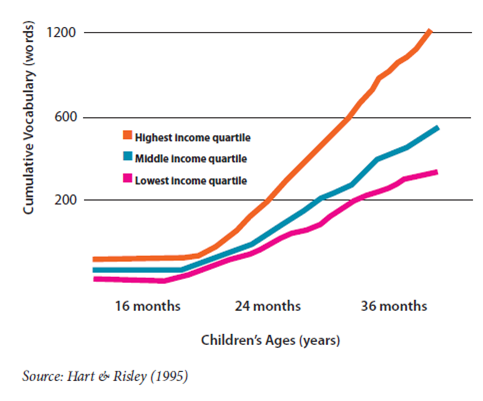
The problem is that there is a gap in vocabulary knowledge for children of different socioeconomic groups. That gap begins at age 3 and just expands as they get older unless something is done to take care of it. Therefore, strong vocabulary instruction needs to begin AS EARLY AS POSSIBLE!! The faster we can start filling in the gaps, the better off these students will be.


So how do we fix this problem?

First, word knowledge does not just come from "wide reading", especially in the lower grades and with students who already struggle as readers. Early learners still have not mastered the strategies to be able to make meaning from an unfamiliar word. Instead, most vocabulary instruction should take place orally. Teachers need to be actively involved in the students' vocabulary development. We will go more in depth with ideas in later weeks, but for now it will stay at that.

One of the most interesting ideas I learned from this chapter was choosing appropriate words using the Three-Tiers Framework.


This graphic from Learning Unlimited, LLC explains the tiers very simply. Students will be able to pick up words in Tier 1 with minimal to no instruction (maybe showing a picture to introduce an animal they aren't familiar with). Tier 3 words, on the other hand, are words that are rarely used in real life or are limited to very specific fields (filibuster, epidermis, etc) that would only be necessary for specific instruction. Interestingly enough, the book groups many content-specific words from science and social studies, unless they have multiple meanings or can be applied across a wider range of texts.

Tier 2 words are where vocabulary instruction should be focused. These words are not used as commonly in conversation, meaning that students will most likely not learn the words on their own. Some examples of these words include circumstances, precede, and accomplice. Once we eliminate Tier 3 words and focus almost solely on Tier 2, we're really looking at about 7,000 word families total for students to learn by 9th grade (or 700 words per school year). The authors recommend shooting for about 400 words per year, although there isn't a perfect answer.

Feeling overwhelmed yet? Please don't be! Chapter 2 is all about how to choose the words for your vocabulary instruction. Be sure to come back and tell me what you think!

Friday, September 27, 2013

A Five for Friday you DON'T want to miss!

fiveforfriday2_thumb[3]

Divider 1

Word Wizard chart in portrait or landscape (I used borders from Bubbly Borders and More and fonts from Kimberly Gershwin)

I mentioned in my post on Wednesday about how I'm focusing on Robust Vocabulary this year. Long story short, I give each group three vocabulary words for the week, and then encourage them to go out and find examples of the words being used at home. They collect those examples on a very simple recording sheet here and bring it back on Friday. Then I will put a star or sticker by their name. Once students get 5, they get to choose a prize from my box!

Divider 2


This may seem small, but one of my students noticed that my skittle jar was running low and decided to bring in a bag to refill it. Bonus: the green are back to LIME instead of green apple. My day was made!

Divider 3


On Fridays, we have game/review day. This is one of my favorite games because the words are higher level. Unfortunately it's too high for half of my kids, but I pulled it out for my higher 4th and 5th grade students. Notice a theme here?

Divider 4

Sometimes I do brain breaks before the students leave, and I recently added a few to my Pinterest board. One of my favorite new ones...


Hehe, I almost took video of my kids doing it. Hysterical! You can follow my board here. I also have "What Does the Fox Say?" which I highly recommend for a good laugh!

Divider 5


To celebrate surpassing 500 followers a while back, my Halloween Literacy Pack will be free for the next hour (or until I have a chance to get home and to a computer). Go grab it and be sure to leave feedback!

The time has now passed for the flash freebie, but you can still click on the link to add it to your cart!

Wednesday, September 25, 2013

Robust Vocabulary

Sorry, no pictures today, but I wanted to share about something I'm starting with my kids this year. It will tie into my writing instruction, so I'm also linking up with Jivey for her Workshop Wednesday.


 You may remember a while back that I bought this book after having it recommended by another 5th grade teacher as "the best" for vocabulary instruction. I have to say, so far I'm liking what I'm reading!


Vocabulary is SUCH a huge weakness overall at our school, and I want to be more purposeful in my instruction. Admittedly, the beginning of the school year hit me like a freight train, so I've only made it about 40 pages into the book, but I took one idea away from the very beginning and have already started implementing it with each of my groups.

Beck talks about Tier 1, 2, and 3 words. Tier 1 are the words that students already know and/or are very easy to understand (dog, school, jump, etc). Tier 3 words are words that are not used by the average person. Many of them are area specific (isotope, chlorophyll), and we learn them for a time when we have to at school and then forget them unless it's a part of our profession. For vocabulary instruction, we should focus on Tier 2 words - words that expand students vocabulary and are found more frequently in books and/or everyday conversation. Examples of these words would be things like considerate, adapt, industrious, etc.

How am I teaching these words? First, I'm making a more conscious effort to not water down my vocabulary when I'm teaching. Yesterday, I used words like "benefits", "penalize", and "perks" to discuss my homework assignment. It was neat to see the students tuning in and having to use their context clues to figure out what I meant, but if I keep using words like that, they will get it!

Yes, you read that correctly. I'm assigning OPTIONAL HOMEWORK to all of my students (since I'm only a pull-out program and not their regular teacher). I can't even believe it, but that's why I'm stressing the OPTIONAL part. Each group has three vocabulary words for the week. I'm introducing the new words on Monday and we discuss the meaning and some examples of how these words are used in sentences. Then they have a challenge (the homework assignment): I give them a "Word Wizard" sheet with three columns. They are to go home and look/listen for the words being used (tv, newspaper, internet, conversations, books). Then they can write or glue these sentences on the paper. Any students who turn the sheet in at the end of the week gets a star for their chart (I haven't created it yet, but I'll share when I do). Once they have 5 stars, they will earn a prize!

So, what are some words I'm using this week? Since my 3rd and 5th were focusing on character traits, I chose mainly characteristics. I also paid attention to words they didn't seem to understand and may have already had an interest in.

3rd grade - adapt (Ecosystems tie-in), patient, and pleasant.
4th grade - outgoing, courageous, and amusing
5th grade - humble (they really wanted to know what this meant), eager, and considerate

Okay, I know that was a lot of rambling. There was more to explain than I thought! I hope it helps, and I will share my "Word Wizard" sheet later. Right now, it needs a few tweaks!